
10 Animals Named After Countries
The names could be confusing
Is a Portuguese Man-of-War some fighting dude from Portugal? Who or what is a Scottish Fold? How about a Belgian Malinois? Sounds like something yummy, if you ask me. Does English Leicester refer to a soccer club in the English Premier League? Well, they all belong to the animal kingdom. How many of us know them? You’ll notice that these ‘country-animal compounds’ are unique for the various countries, and their attached animals. For example, there is no Spanish Man-of-war, Jamaican Pot Belly, Chinese Fold, or American Malinois. Below is a list of animals whose names are linked to various countries–and whose names can make anyone conclude they’re anything but!
1. American LaMancha

Most of us associate ‘dairy’ with cattle. The American La Mancha, or simply, LaMancha or Lamancha is a goat breed known more for its milk than its meat, and is said to be the only breed of goat developed in the United States, says Goats. Dairy goat? That’s right. Its most distinguishing feature is its tiny ears. Their origin is not very certain, although the general belief is that they are descendants of goats of similar stock brought to California by missionaries from Spain. La Mancha is a geographical area in Spain. Whatever it is, you have in a La Mancha, a friendly, lively, intelligent, curious, and reliable milk-making machine, producing milk that is said to be rich in milk-fat and protein. A typical American La Mancha looks like the goat pictured above.
2. Australian Melaan
Another goat is here; another breed of dairy goat–the Australian Melaan. Distinctly black, its name 'melaan' stems from both its color and its source; the ‘mel' from melanin, a black pigment or substance that gives the black color, and 'aan' from Saanen, Switzerland–where it’s origins are traced (probably from a Saanen buck imported into Australia in the 1940s), according to the Dairy Goat Society of Australia(DGSA).

Its hair, short and glossy, is perhaps one feature that will attract anyone. It is tall, sturdy, graceful, and highly intelligent. Despite its calm nature, the Australian melaan is probably one of the hardiest and most disease-resistant goat, the Goat Industry Council of Australia says. The above picture is a representation of the Australian Melaan.
3. Belgian Malinois
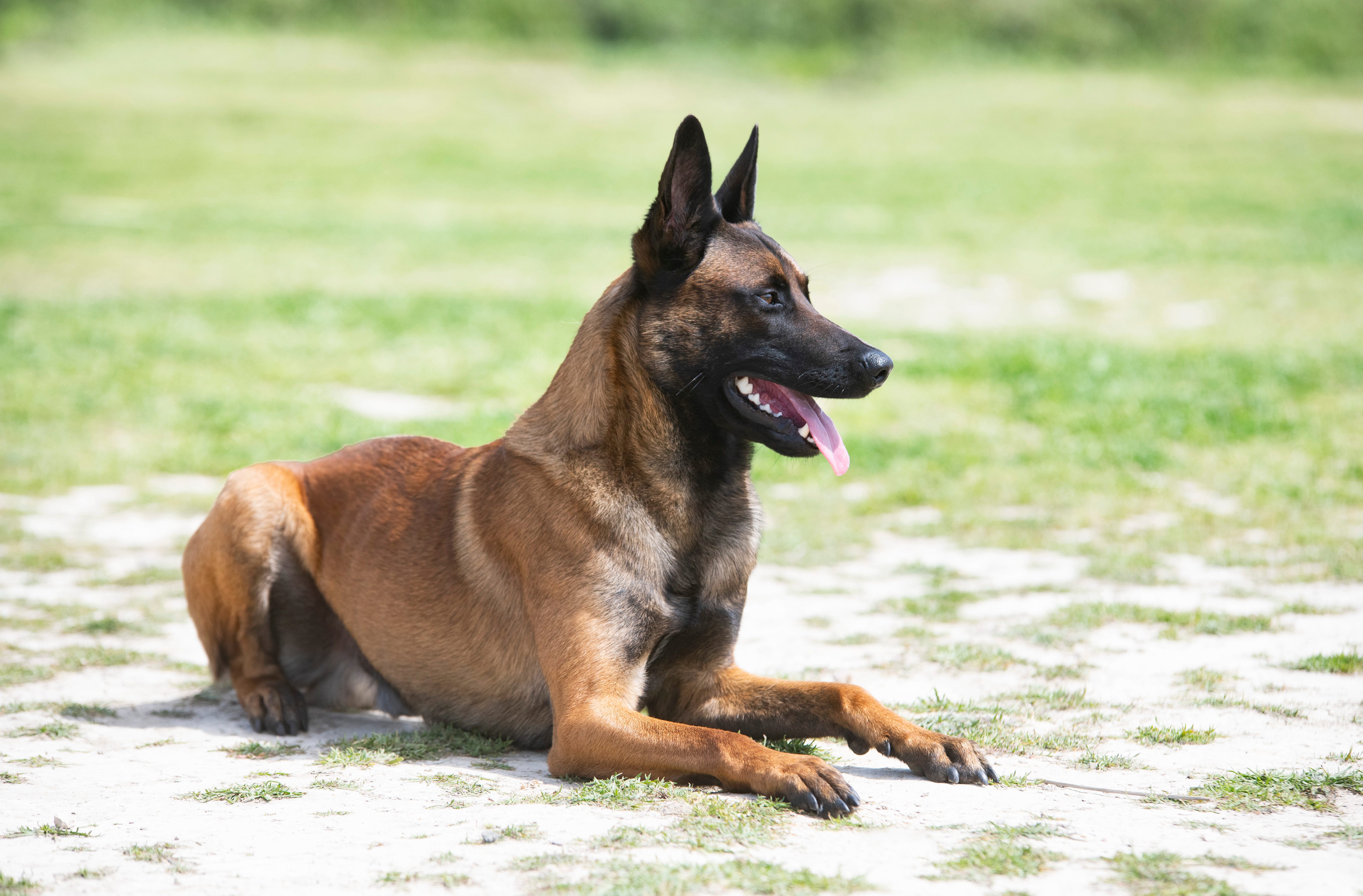
To dog lovers, this name might be quite familiar. The Belgian Malinois, sometimes called the Belgian Shepherd, has an elegant, stately, almost regal appearance. This intelligent, strong, and tireless canine is said to run almost endlessly in wide circles rather than in a straight line, perhaps ideal for its role as a sheep herding dog especially in old times, says the Petfinder website.
Today, the Belgian Malinois is found in a few homes; but principally, it is used by the police, and is even more preferred in this ‘police dog’ duty than the traditional German Shepherd. Smart, alert, and always on the move, it is said to have been developed in the Malines area in Belgium, hence its name.
4. Brazilian Ruby
Next, we’ll look at the teeny-weeny Brazilian Ruby, a type of hummingbird found on the edges of forests in the eastern part of Brazil. But, wait a minute! ‘Brazilian Ruby’ may refer to(you guessed right) a gemstone.

Let’s talk about the bird. As hummingbirds go, the Brazilian Ruby is not exactly small, Beauty of Birds reveals. While green is their dominant color, females have a “cinnamon” lower side while males have smatterings of copper and reddish-brown on their back, rump, and tail. They have a bill that is dark and straight, a ‘tear-drop’ at the corner of the eye, and got their name from their ruby-colored, shiny throat that changes color, depending on which angle you look at the bird from. Nectar is their typical diet. A typical hummingbird is pictured above.
5. English Leicester

The English Leicester is a type of sheep found mainly in Australia and also once popular with farmers in New Zealand. It is listed as ‘longwool’, the sheep type producing long, wavy, soft, and shimmering wool, reveals the Australian Leicester Association of Australia(ELAA). The English Leicester was developed in the eighteenth century by Robert Bakewell, a man from a sheep rearing family in Leicestershire, England. Bakewell was the originator of what has become known in modern-day agriculture as ‘selective breeding’, –breeds of one stock made to mate with sheep from other types, according to the ELAA. Reference is made to him by the great Charles Darwin himself in his book On the Origin of Species.
English Leicesters were introduced into Australia in the 1800’s, says the ELAA, by various groups and individuals, notable among them the Byrant brothers, and a man named W.J.T. Clarke, who is said to have brought 20 ‘pure Leicester sheep’ when he arrived in the Australian island state of Tasmania in December of 1829. By the middle of the 1830’s the English Leicester, as it became known, had become one of two most abundant sheep types down under. The sheep above look very much like the English Leicester.
6. New Zealand Kaka

Sometimes called Nestor Parrot, and also known simply as Kaka is a type of parrot native to the forests of the main islands of New Zealand and its smaller surrounding ones like Hen and Chicken Islands, says New Zealand Birds Online. This is a magnificent parrot, with bright brown feathers and markings of red, orange, and even yellow when it is young. Its sound, or call, ranges from “harsh, grating” to more ‘melodious’ cries, says ebirds.org. Most often, you’ll hear the cry of this skillful flier before spotting it as it makes its way gracefully between branches, according to New Zealand Birds Online. The name kaka is the Polynesian word for parrot, and comes from the Maori language, reveals Beauty of Birds.
New Zealand Birds Online says its diet is an entire buffet of all manner of fruits and seeds, flowers, nectar, sap, the larvae of wood-boring insects, and even eggs of small birds.
Studies from the Department of Conservation show that the New Zealand Kaka faces some threats, though. Not only is its natural habitat of forest is being mercilessly cut down but it is also at the mercy of predators, most notably the stoat, and government and communities are fighting hard to recover it.
7. Portuguese Man-of-War
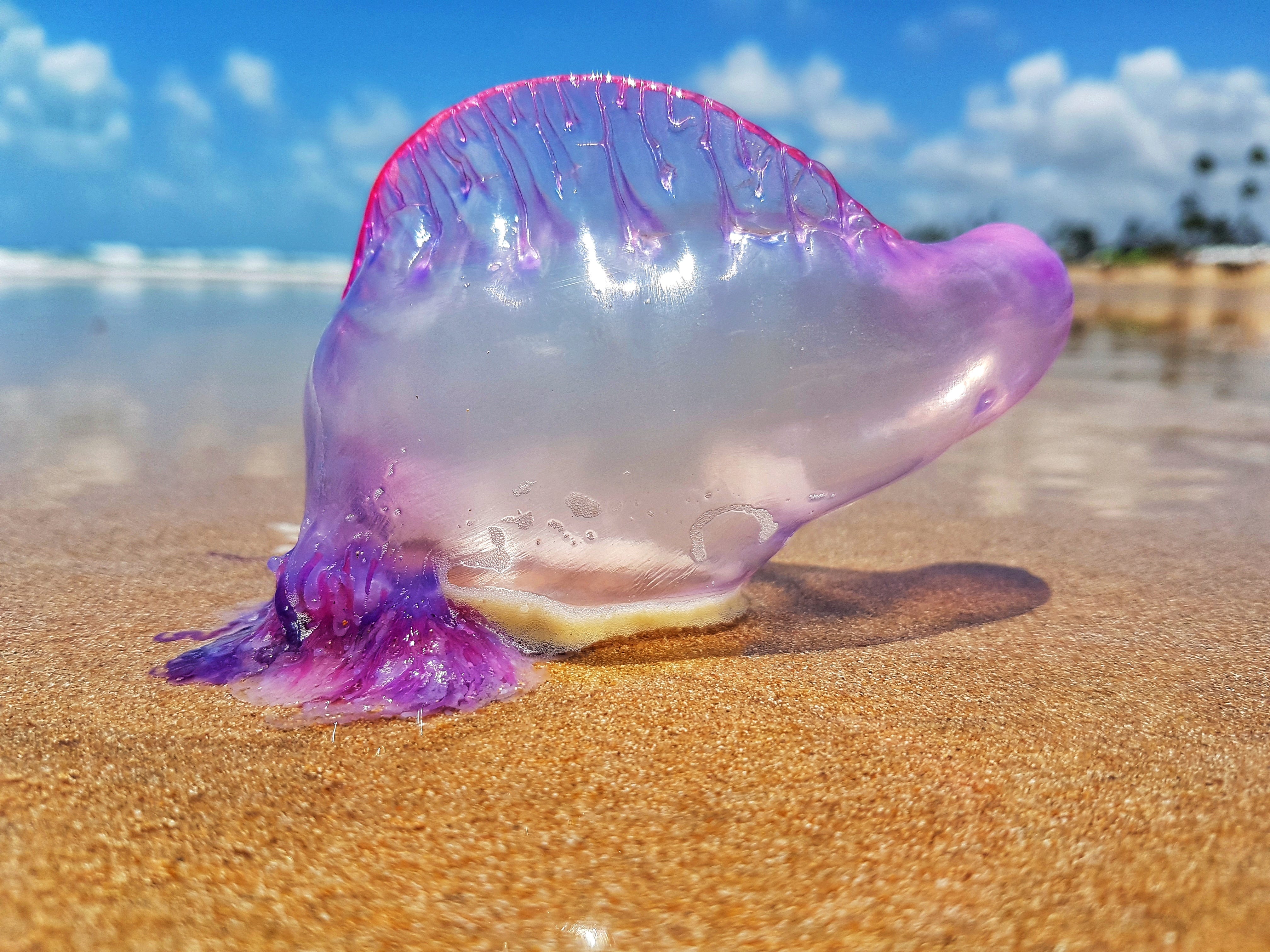
A most gorgeous creature–its cuddly appearance a stark departure from a ferocious-sounding name. Also called Portuguese Man o’ War, some people mistake it for a jellyfish, but more than being just one animal, it is a combination of organisms (a siphonophore), consisting of a colorful ‘airbag’ that floats on water, and long braid-like tentacles which are below the sea surface, says the National Geographic Society.
The Portuguese-man-of-war floats about in tropical seas, just drifting to and fro under the influence of winds and ocean currents. Think of a thousand or more blue, violet and pink balloons floating on the sea! This air-bag, from which it derives its name, in that it looks like a Portuguese warship of a by-gone era under full sail, may reach the size of a medium-sized coconut while its tentacles may be more than 10 times longer, the National Oceanic and Atmospheric Administration reveals.
The man-of-war may deflate the air-bag and sink below sea-level briefly when it senses danger. You’d better not mess with a Portuguese man-of-war though. Those tentacles sting and emit a lethal poison that disable and kill its prey of fish and other small creatures, and a sting will give you an agonizing pain, the National Geographic Society warns.
8. Scottish Fold
A student of geography could mistake this for the name of a mountain range in Scotland, but the ‘auld enemy’ lends its name to this popular breed of cat. The Scottish Fold has an unusual appearance. Apart from a rounded facial profile, its small ears appear slack, folded (that’s how it got its name), and lie almost flat on its head giving it a ‘portrait’ like that of an owl, a BBC news feature shows. It is said to be docile, playful, intelligent, and sweet.
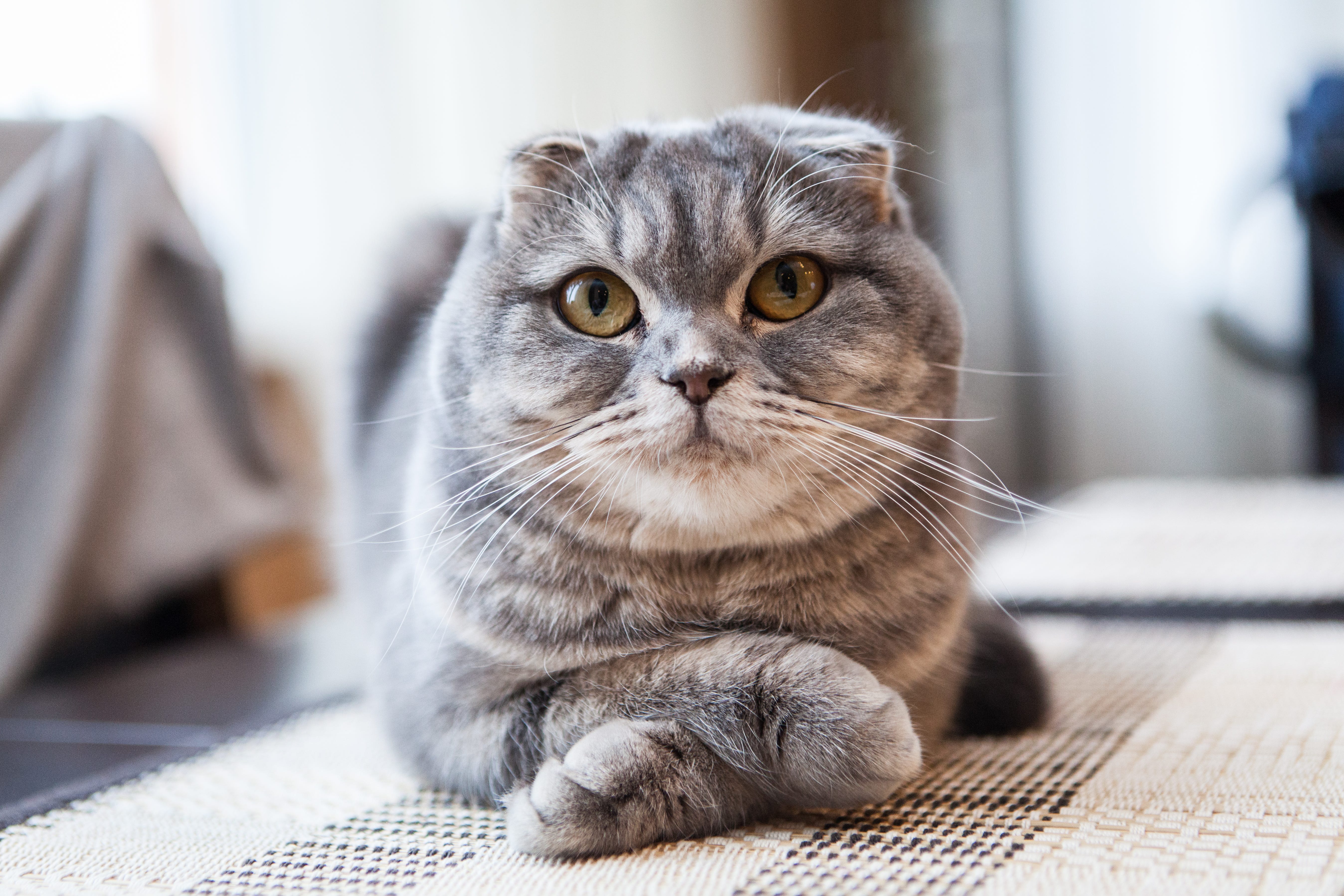
Scottish folds also have an interesting history. They can be traced to one particular ancestor named Susie, the first cat exhibiting those features, discovered and bred by a couple in Scotland in 1961, reveals Petfinder. A genetic mutation in this cat is said to affect its cartilage leading to the folded ears, and also causes a painful, life-threatening form of arthritis. Concerned about the Fold’s life of pain, the British Veterinary Association is asking for a total ban on the breeding of this adorable creature, according to the BBC feature.
9. Turkish Angora
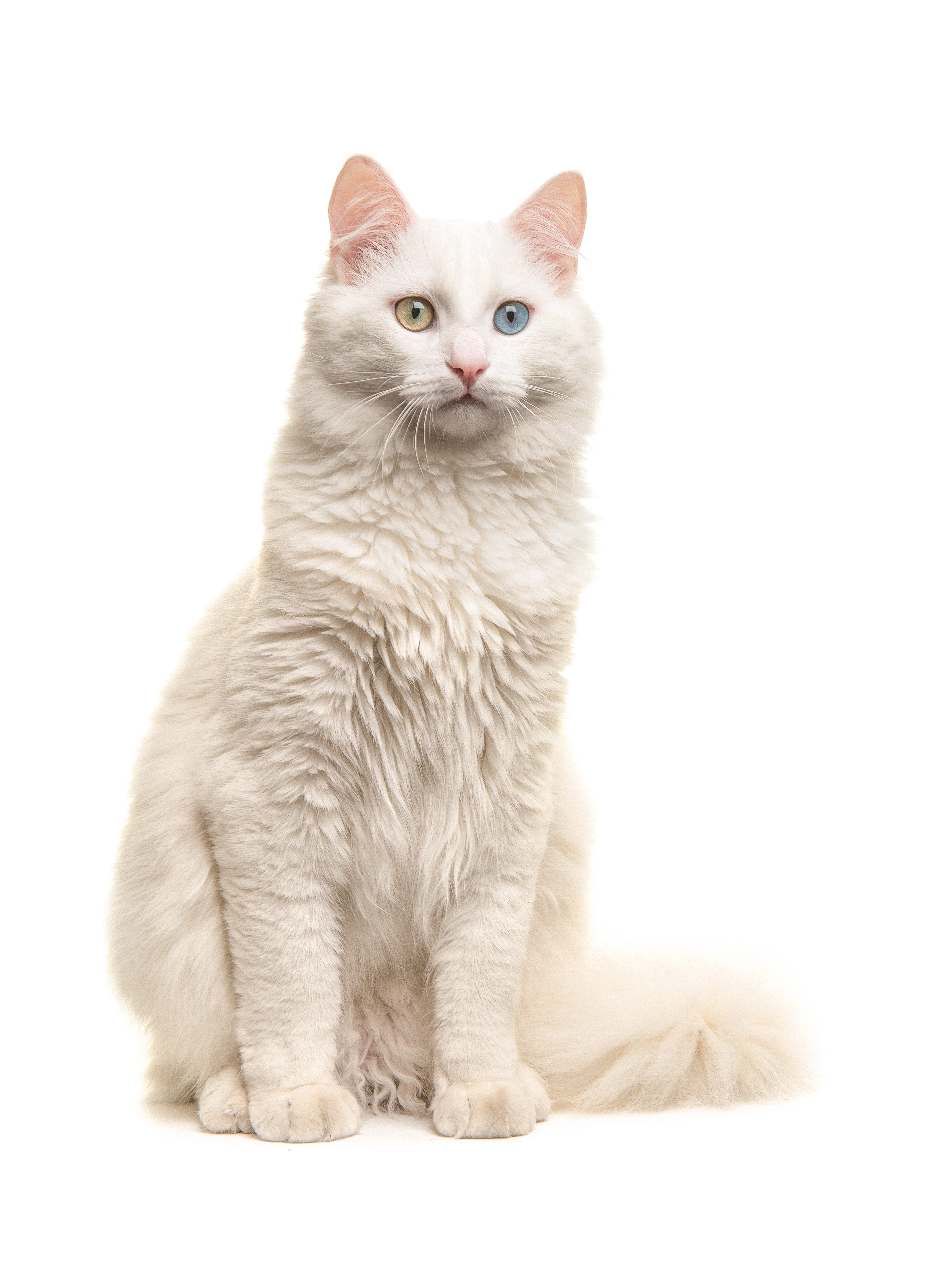
The animal nerds will normally associate ‘angora’ with goats; or rabbits, both breeds known for their prized wool. The Turkish Angora is a breed of cat. Playful, lively, friendly, and very active, this beautiful animal with a rich covering of long, silky fur is also a loyal ally. According to Petfinder, the Turkish Angora was previously called Ankara cat, and in an interesting twist, the capital of Turkey also changed names–from Angora to Ankara in 1930.
There is a bit of a dispute about the origins of this shiny-coated creature. While its name suggests Turkish roots, some trace it to the African wildcat, says Petfinder. The founder of Islam, the Prophet Mohammed, is said to have owned an angora which he called Muezza.
10. Vietnamese Pot-belly
Also called the Vietnamese Pot-bellied, Vietnamese pot-bellied pig or Pot belly pig, this rather smallish pig originated from Vietnam as the name suggests, but is now a lot more widespread, says the Fossil Rim Wildlife Center. Brave and sociable, it is usually dark colored and has short legs and an enlarged belly that almost touches the ground, which is its most noticeable feature.
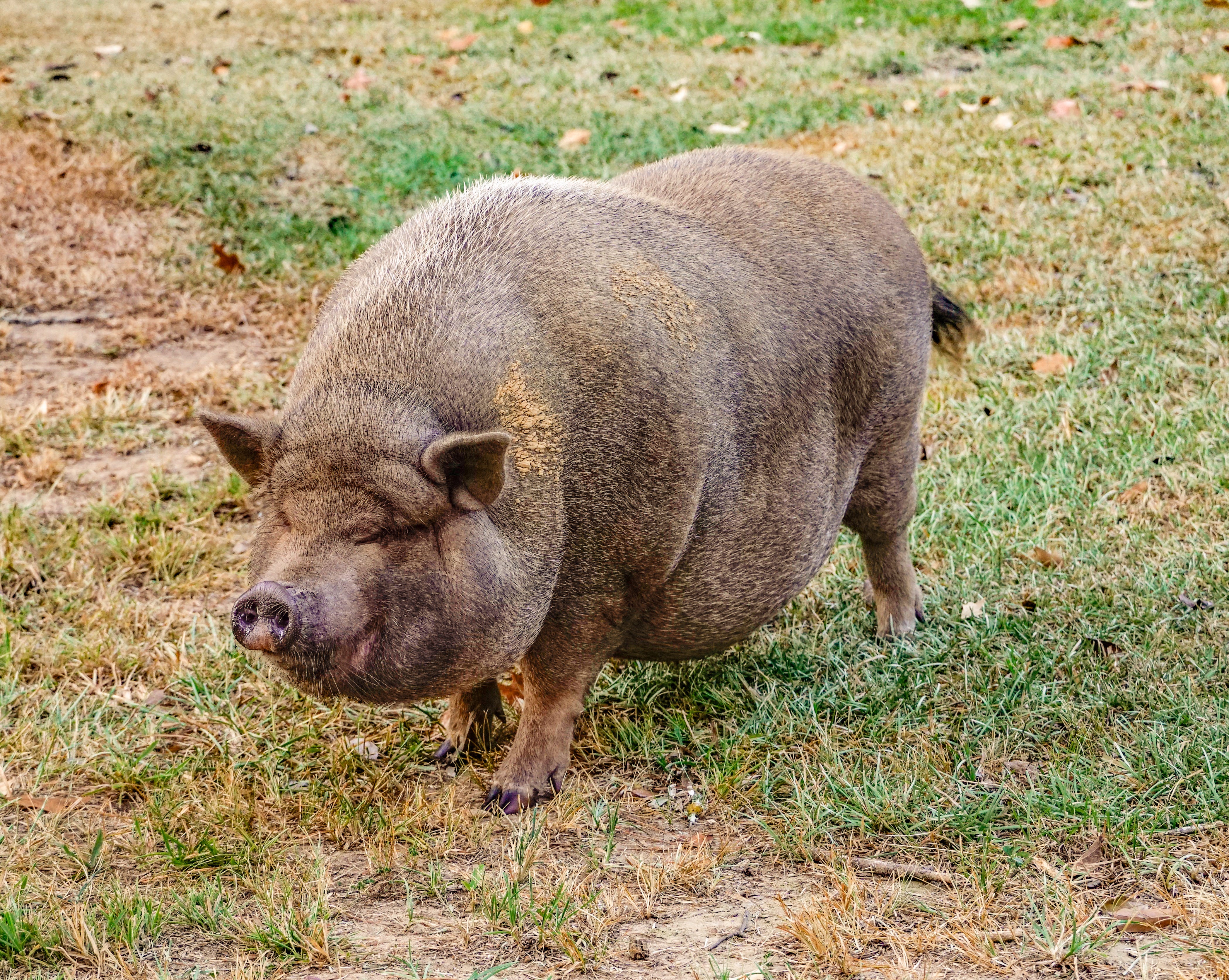
It is probably the only breed of pig that is ‘domesticated’ in the real sense of the word, often kept as a pet, especially in the West; but it grows into an enormous pet, some owners realize not too happily, reveals The Pig site. As a pet, the pot-belly is docile, neat, and intelligent, according to Fossil Rim. It is also sometimes considered in some Vietnamese cultures as a symbol of joy and affluence, an LA Zoo website shows.